Login
Login
 Subscribe
W.H.O. championing health in Samoa and beyond
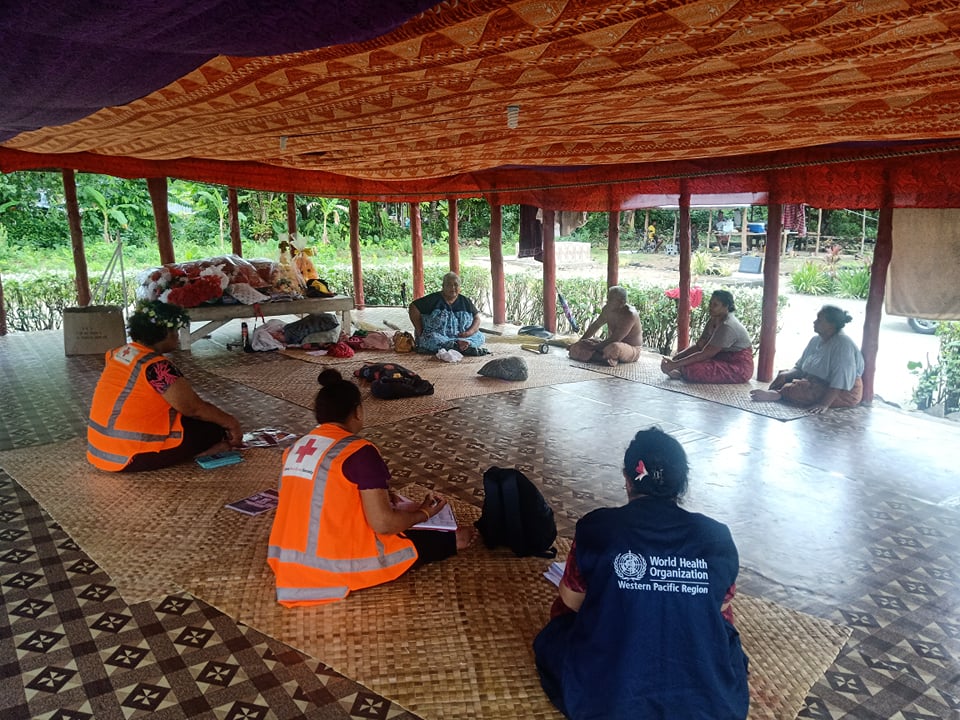
The World Health Organisation (W.H.O.) is celebrating 75 years of championing health for everyone everywhere. The work of the W.H.O. bridges two centuries that have seen major advancements in technology, medicine, and science – all of which significantly supported progress towards the goal of Health for All.
However, both centuries have also been characterised by financial crises, wars and famines that have led to economic hardships and displacement of millions of people, global warming, environmental degradation, polluted seas and skies and disease outbreaks, including the ongoing COVID-19 Pandemic. These events led to gaps in achieving the 2015 Millennium Development Goals (MDGs) and now have stymied efforts to achieve the 17 articulated 2030 Sustainable Development Goals (SDGs). Goal 3 is specifically focused on Good Health and Well-being, while health is also a key focus in seven other Sustainable Development Goals.
Despite these challenges, the W.H.O. has led and made, with its member states, notable progress in many areas. Today, few people, including those in Samoa, could say that they have seen the paralysis caused by polio, which attacks children under five years old. This is because, in the 20th Century, the W.H.O. advocated for mass global polio vaccination campaigns in 1961, which reduced polio cases by 99 per cent globally by 2022. The W.H.O. also brought life-saving vaccines to the world through the establishment of the Expanded Programme on Immunization in 1974; and declared small-pox eradicated in 1980 after a 12-year intensive global vaccination programme
Tobacco continues to harm its users, including in the Pacific and in Samoa. In the 21st century, in 2003, the W.H.O. developed the first global public health treaty on tobacco that continues to protect over 5.3 billion people, including children, from the harmful health effects of tobacco. In 2006, for the first time in recent history the number of children who died before their fifth birthday declined to under 10 million, through targeted vaccination and disease prevention programmes. In 2021, through relentless advocacy and targeted programming, 75 per cent of persons living with HIV accessed treatment and more than 74 million lives were saved through TB prevention, diagnosis, and treatment since 2000. In Samoa, less than 20 persons are living with HIV.
‘The Organisation shall render technical assistance to the government… in accordance with the relevant resolutions and decisions of the World Health Assembly, the Executive Board and other organs of the Organisation’
With these words contained in Article 1 of the Basic Agreement between the W.H.O. and the Government of Western Samoa, the W.H.O. established formal relationships with Samoa. The document was signed in June 1962. Prior to this, the W.H.O. provided technical assistance from its Regional Office in the Philippines from May 1953 and from its Representative Office in the South Pacific, Fiji, from 1956 to 1968. The first W.H.O. Representative Office for Samoa was established in 1986 to also provide coverage for American Samoa, Cook Islands, Niue, Samoa, and Tokelau. The first office was housed in the Loane Viliamu building.
In the early days, the W.H.O. focused heavily on Health Systems strengthening including strengthening human resources for health and building a health workforce that was fit for purpose. The 1994-1995 biennium saw expenditure on its Fellowship Programme of USD$473,478. This focus continues with the programme graduating 114 Fellows since 2013 including 19 undergraduates with Bachelor of Medicine and Bachelor Surgery; Bachelor of Dentistry; Bachelor of Dietetics and Nutrition and Bachelor of Medical Imaging. In the post-graduate programmes (diploma and certificates) 76 graduated, including 64 from the Midwifery programme, while 19 others gained Masters’ degrees in Public Health, Dental Surgery and other medical specialities.
Elimination of vaccine-preventable diseases has also been a longstanding programme through the Expanded Programme on Immunisation, which the W.H.O. established in 1974 to bring life-saving vaccines to all the world’s children. The 2019 measles outbreak in Samoa demonstrates the importance of this programme and the effectiveness of vaccines in disease prevention. The epidemic was quickly brought under control through mass vaccination efforts conducted over a two-day period. The W.H.O. coordinated approximately 518 overseas medical and allied professionals to support Samoa from September 2019 when the epidemic was declared to January 2020 when the epidemic was over.
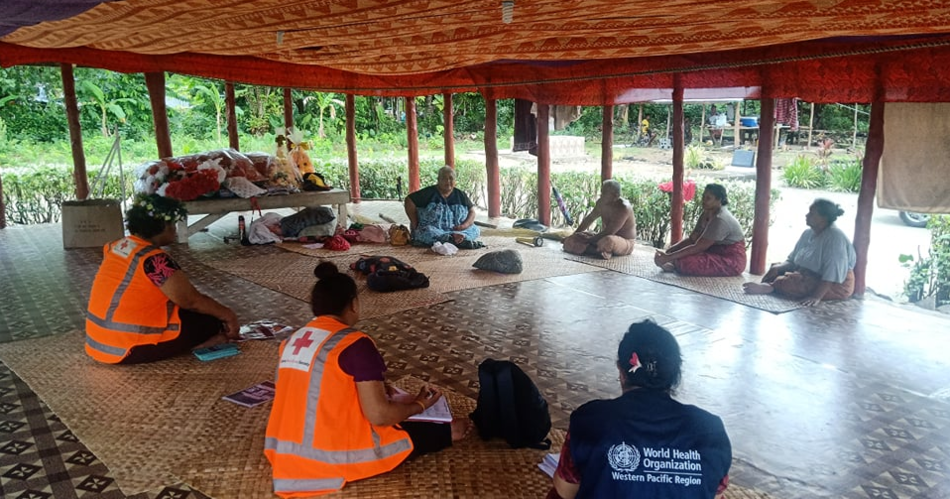
On the heels of the Covid-19 epidemic, the W.H.O. supported Samoa to prepare and respond to COVID-19. Samoa has now fully vaccinated more than 93 per cent of the eligible population with the last dose of the primary series. This helped to contain the potential damage including the extensive loss of life. While every life lost is tragic, to date only 31 people have died from COVID-19. In addition to supporting the capacity building of health workers in Infection Prevention Control, the W.H.O. also supported the Ministry of Health to raise public awareness of the risk of COVID-19 and the benefits and vaccines.
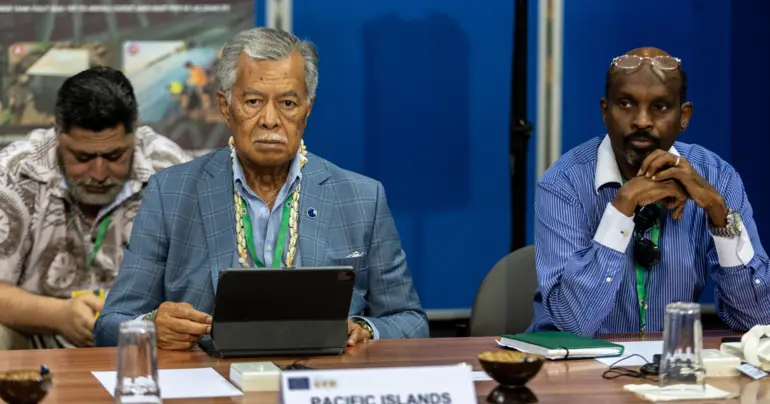
Together with the World Food Programme, the W.H.O. coordinated the delivery of 15 Tonnes of COVID-19 supplies including 280,000 surgical masks, 248,300 gloves, 30,000 N95 masks, 72, 000 hospital gowns, 10,300 face shields, 3000 pulse oximeters and 50 oxygen concentrators. These were funded by the European Union. Similar efforts were extended to American Samoa, Cook Islands, Niue, and Tokelau.
As we look towards the next 75 years, we undertake to Samoa and all our countries served by the W.H.O. Samoa Office, to continue to serve you and your people until we indeed achieve Health for All. We are proud to be W.H.O. and thank you for the trust you have placed in us to lead this charge, backed by science and evidence.
• This opinion piece was released by the W.H.O. Samoa Office to coincide with 75 years of championing health for everyone everywhere. The office in Apia is the Representative Office for Samoa, American Samoa, Cook Islands, Niue, and Tokelau.