



 Login
Login
 Subscribe
Climate report serves as warning to humanity: experts
 By Marc Membrere
•
07 March 2022, 1:00PM
By Marc Membrere
•
07 March 2022, 1:00PM
Recent Intergovernmental Panel on Climate Change (I.P.C.C.) report shows humanity needs to pay more attention to warnings and Samoa should build climate resilience.
The Working Group II report is the second instalment of the I.P.C.C. Sixth Assessment Report which will be completed this year. This report provides a detailed assessment of climate change impacts, risks and adaptation in cities where more than half the world’s population lives.
People’s health, lives and livelihoods as well as property and critical infrastructure including energy and transportation systems, are increasingly adversely affected by hazards through the form of heatwaves, storms, drought and flooding as well as slow-onset changes, including sea level rise.
According to an I.P.C.C. statement, the latest instalment of its report clearly states climate resilient development is already challenging at current warming levels and it will become more limited if global warming exceeds 1.5°C (2.7°F).
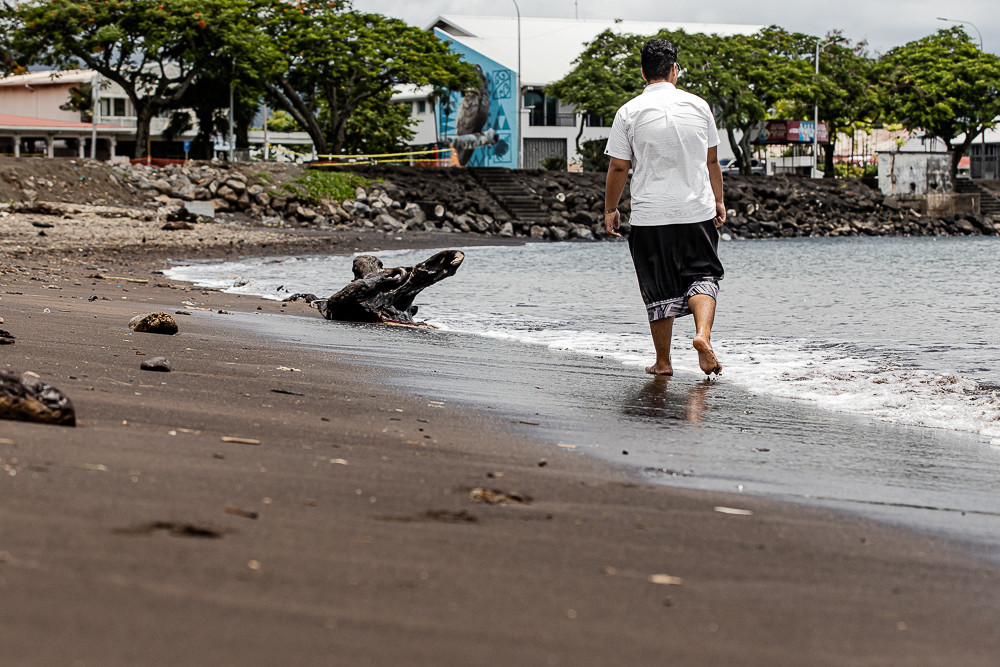
The impact of climate change have been evident across Samoa as over the years with weather events becoming more extreme.
On 18 December 2020 flash floods devastated communities in Samoa which had led to families fleeing their homes. Residents of Moamoa village were among many in the country who were impacted by the 2020 flash floods, losing their land and homes.
However, mitigation of flood impacts became evident in November last year with riverbanks reinforced and riverbeds dug deeper as part of a sustained campaign by the Government to improve flood management before the wet season set in.
The work resulted in deepened riverbeds and shore up the embankments for many of the rivers, especially in high risk areas that were prone to flash floods and heavily populated.
The recent Samoa Government-launched Pathway for Development of Samoa has listed in Key Priority Area 15 climate resilience.
"At an international level, Government will continue to highlight the effects of the climate emergency. It will showcase the impacts of sea-level rises, saltwater intrusion, crop damage, loss of fish stocks, and other negative effects on Samoa's people, with a view to pushing for more ambitious and urgent climate action," the Pathway reads.
"At the national level, further measures will be taken to improve mainstreaming of climate resilience and disaster risk management (including health crisis) in all sectors, drawing on the extensive risk mapping and identified activities in the CIM plans.
"Disaster risk financing instruments will be prioritised to reduce the socio-economic and fiscal vulnerability of the economy.
"This will include increased public awareness of Samoa's risk to climate change and improved technical projections of future disasters to better enable partners to support the prevention, preparedness, response and recovery from disasters."
In a statement issued by Greenpeace Australia Pacific last month on the recent I.P.C.C. report, the Greenpeace Australia Pacific Head of Research and Investigations, Dr. Alex-Edney Browne explained that Australia must urgently support its Pacific neighbours by making rapid, deep cuts to emissions and providing necessary climate finance.
“Every degree of warming makes a crucial difference to Pacific Islands and their communities. The Australian Government’s continued support of coal and other fossil fuels is playing a significant role in the expected exceeding of 1.5 degrees of warming," Dr. Browne said in a statement.
“While climate change has already caused widespread loss and damage in the Pacific, we can still help save our Pacific neighbours."
She added that the report shows maladaptation measures such as sea walls reduce impacts in the short term, but lock in and increase exposure to climate risks in the long-term.
"Most current adaptation measures address only short term, specific risks in a fragmented and reactionary manner. What is needed is transformational and long-term adaptation, and Pacific islands need more climate finance in order to achieve that," she said.
Dr. Browne emphasised that the Australian government must significantly increase its climate finance for the Pacific.
"Between 2022 and 2025, we need to see an immediate increase, rising to $12 billion annually by 2026. This must be scaled up climate finance separate to the foreign aid budget rather than a reallocation of it," she said.




