



 Login
Login
 Subscribe
Once in a blue moon party
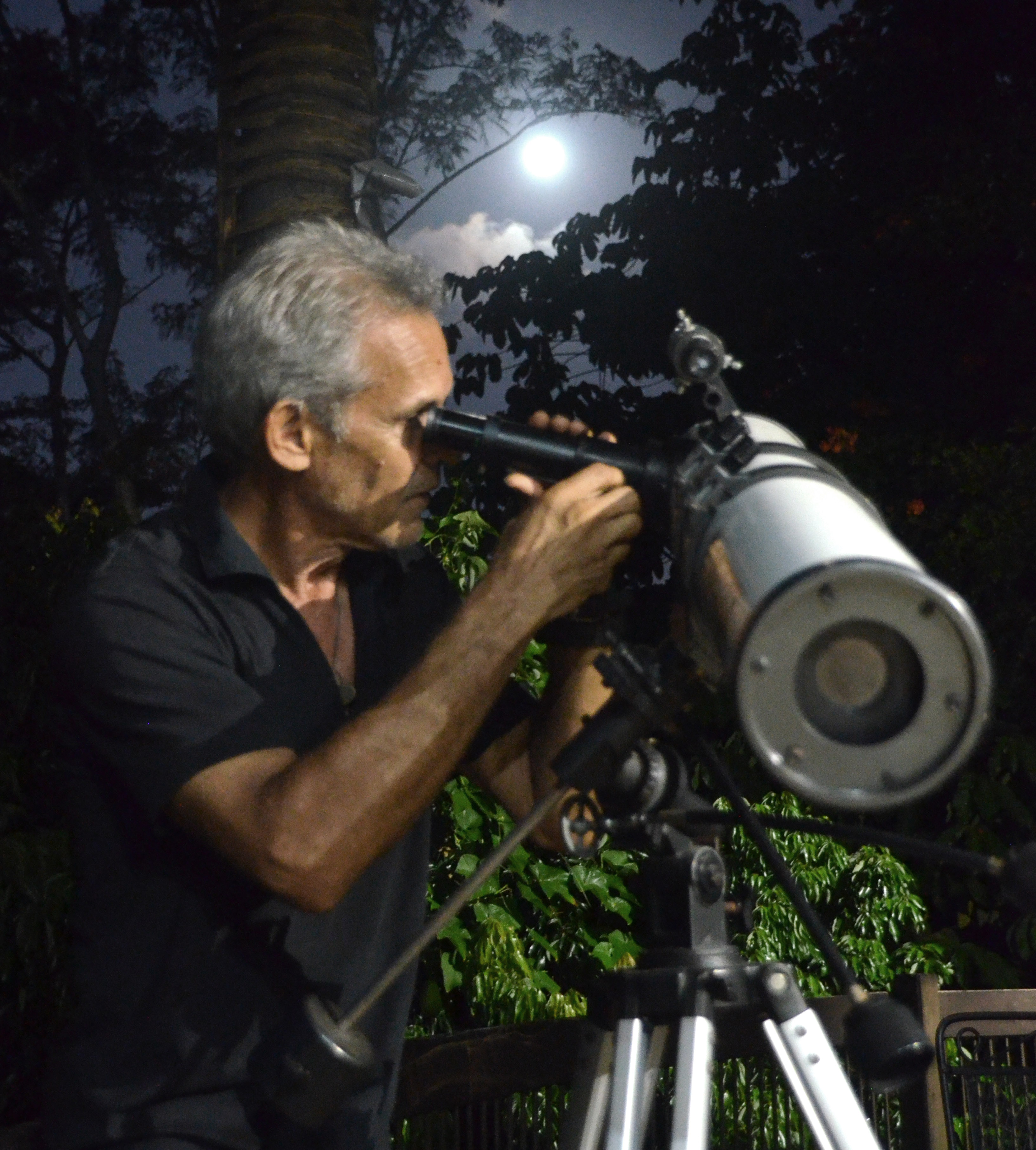
 By Marc Membrere
•
21 August 2021, 10:00AM
By Marc Membrere
•
21 August 2021, 10:00AM
The Tiapapata Art Center will host a "Blue Moon Party" this Sunday dedicated to viewing the lunar event - whose rarity is immortalised in the phrase “once in a blue moon”.
The phrase does not refer to the actual colour taken on by the moon. Rather a blue moon refers to an extra, unexpected full moon in a season.
Typically 12 full moons occur in a year - three for each of the seasons in the northern hemisphere: summer, winter, autumn and spring. Rarely a fourth full moon will occur, something which sky gazers refer to as a blue moon. Having a second full moon appear in a month also meets the description.
The Blue Moon will appear on Sunday night and Galumalemana Steven Percival of the Tiapapata Art Center is seeking to use the opportunity as a chance to grow Samoans’ interest in astronomy.
He said that astronomy is an area that Samoans should be learning more about because the country’s traditional knowledge is slowly being lost on a daily basis.
"Every time an elder passes away, he or she takes knowledge with him or her," Galumalemana told the Samoa Observer.
He said that Samoa’s ancestral knowledge of navigating by way of the stars was precious and needed to be captured.
"They knew where the islands were. How did they navigate? mainly through their knowledge of the stars and the constellations. And it's that knowledge which I'd like to kind of get people interested in reviving," he said.
"So we've brought in a number of telescopes and I recently wrote a three hundred word essay to the competitive, global competitive programme put our by the international astronomical union and was awarded a telescope that will be signed by astronauts, so this telescope is coming from Brussels and it will be shipped in the near future with the support of a university that is promoting knowledge of the stars and the cosmos.
"So with these telescopes we hope to set up an astronomy club, society, trust that will look to promote knowledge of the stars in Samoa and in the Samoan language.
“So part of this will require some research and talking to the elderly people, some fishermen who still have good knowledge of the stars but also looking at stories, legends, myths that mention stars.
"So there are in fact even songs that refer to the stars and we hope to be able to promote an interest in this field of study that is currently not on Samoa's educational map, even at the university."
Galumalemanu said the astronomical events occur roughly once every two and a half years.
He said the event is not particularly rare due to its cyclic appearance but rare enough for it to have become synonymous with something that happens rarely.
"The moon doesn't turn blue unless there's severe dust storms and that can cause a different atmosphere that can create colours,” he said.
“There's been historical incidents where the moon appears to be turning blue but because of dust storms that are being created by natural events.
"And the whole history behind the naming of blue moons is very interesting and that perhaps is one that might have contributed to [naming the lunar phenomenon]”.
Galumalemana said blue moons feature heavily in the oral culture of indigenous societies around the world.
"They [each] have their own names [for them],” he said.
“So for the Native American Indians, this particular moon is referred to as the Sturgeon moon because of the sturgeon fish and it could be some of the colors associated with what's happening in the natural world when this moon appears blue, blue in colour.”
Different indigenous societies associate different events with blue moons.
"So there is something called the corn moon, there is the harvest moon. There is the belief in Samoa that even though corn is a relatively new product, Samoans understand that the full moon period is the right time to plant the corn," he said.
Galumalemana hopes that Sunday’s blue moon will be the first in a series of astronomical events to whet the public’s appetite. In September, the planets Neptune and Mercury will be at their closest to the Earth for the whole year, and maybe for several years.
"We recently had a super blood moon which is a rare event," he said.
He added that there are eclipses occurring all through the years, including meteorite showers and star showers.
"I believe that the strongest telescope that we have here on site now will allow us to observe nebula systems, galaxies, galaxies out in the far universe," he said.




