



 Login
Login
 Subscribe
Vaccine targets months away; new brand considered: Govt.
 By Soli Wilson
•
16 July 2021, 8:20PM
By Soli Wilson
•
16 July 2021, 8:20PM
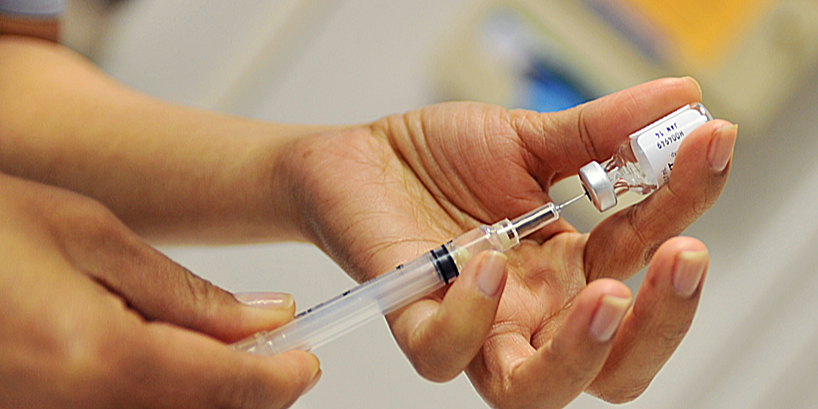
Pregnant mothers and others currently unable to receive COVID-19 shots may soon be able to be immunised against the virus by receiving kind of vaccine, as the Government forecasts it will meet its ambitious vaccine targets.
The caretaker Prime Minister, Tuilaepa Dr. Sa'ilele Malielegaoi, revealed the Government predicts it will establish a vaccine surplus as it forecasts meeting targets are just months away.
Tuilaepa said he expects everyone in the eligible population to be vaccinated by between September to October this year.
“After Samoa is fully vaccinated, there is a very big possibility that we will begin negotiating for a bubble and additional flights,” he said.
“We are not far away – July, August, September, October – by then we should hit bingo. This will make travelling easier and other operations.”
Health authorities have previously said that the national borders will remain closed until 98 per cent of the eligible population is immunised.
The caretaker Prime Minister alluded to the potential addition of the brand to the vaccine mix during his programme with state-owned 2AP radio on Thursday.
The brand of vaccine in current use in Samoa - made available via the World Bank managed COVAX facility - is manufactured by the AstraZeneca company.
But the Government says it is considering supplementing its supplies with another dosage - made by Pfizer–BioNTech - that would allow more people to be safely vaccinated against COVID-19.
Tuilaepa Dr. Sailele Malielegaoi confirmed that a total of 395,000 vaccine doses that have been made available to Samoa during his weekly programme with the state-owned 2AP radio on Thursday.
He said Japan has offered a total of 106,000 doses, Australia a total of 220,000, while the COVAX facility in general has allocated the country a total of 79,000 vials. (A remaining 27,000 is yet to be received from the COVAX Facility whilst Australia delivered the first 10,000 vaccine doses batch last Friday.)
“So in total there are 395,000, but the doses needed for those who are eligible to be vaccinated is 235,000,” he said.
“We have an oversupply.”
Those who cannot be vaccinated include pregnant or breastfeeding women, people who are bedridden, and those over 85 years old (for whom vaccination is optional).
Debate about which brand of vaccine to be used has occurred in several countries; Australian health officials recommend that only people under the age of 60 are immunised with the AstraZeneca brand. Pfizer is the brand suggested for use among younger members of the country, despite the country encountering problems with its supply.
The Pfizer brand is the most popular in use in America. Other countries are adopting an unorthodox strategy of mixing the two vaccines; preliminary research, such as that published in the journal Nature, suggests that doing so may could increase patients' immunity to the virus.
Vaccination in Samoa is only allowed for those 18 years and over.
The list also prohibits those with a high fever (above or equal to 38 degrees), weak immune systems, including those who have been on steroids for a long time, those receiving active cancer treatment, people with bleeding disorders, and those with a known history of severe allergic reactions to vaccines including skin rash, swelling of the throat and eyes and breathing difficulty.
“Remember we have those who cannot be vaccinated [with AztraZeneca], there is hope that we will plan a vaccination programme for them, but with a different brand of vaccine,” the caretaker Prime Minister said.
“They may be using the Pfizer as it is more suited for them.”
Samoa currently is exclusively using the Oxford-AstraZeneca vaccine for those 18 and older. Meanwhile, Pfizer-BioNTech is authorized to be used on children from the age of 12.
Last month, an analysis by the Public Health England (P.H.E.) showed that vaccines made by Pfizer Inc (P.F.E.N.) and AstraZeneca offer high protection of more than 90 per cent against hospitalization from the new, deadlier Delta mutation of the disease.
The Delta variant is becoming the globally dominant version of the disease, affecting Samoa's Pacific Island neighbours such as Fiji and New Zealand.
Fiji recorded a record of 1220 new cases of COVID19 in 24 hours on Friday since the latest outbreak began in April. The death toll has reached 74.
Fiji has the highest number of cases per capita in the world. The nation continues to struggle with people not following protocols, COVID positive cases moving around and mass misinformation on vaccinations and the pandemic; cases continue to rise along with the burden on health workers.
Currently, a total of 54,380 individuals have received their first dose (44.6 per cent of the eligible population) with a total of 13,807 who have received their second dose (11.3 per cent of the eligible population).
The vaccine requires a second shot to be administered 8-12 weeks after the first, in order to complete inoculation.
The latest data from Johns Hopkins University shows that 189 million people have been infected with the disease while more than 4 million have lose their lives to it.




