



 Login
Login
 Subscribe
Manual to guide pacific island countries to prevent Aedes-borne diseases
 By Adel Fruean
•
22 May 2021, 5:00PM
By Adel Fruean
•
22 May 2021, 5:00PM
A manual for surveillance and control of Aedes mosquitoes’ vectors in the Pacific was launched this week in a virtual meeting by the Pacific Community (S.P.C.) and the World Health Organization (W.H.O.).
The manual was developed by S.P.C. and W.H.O., in consultation with several countries and partners of the Pacific Public Health Surveillance Network (P.P.H.S.N.), with the goal of strengthening vector surveillance and control capacities and capabilities across the Pacific region.
The development and production of this manual were supported by funding from the Agence française de développement (A.F.D.) to SPC on “Strengthening the capacities of the PPHSN” and the Australian Department of Foreign Affairs and Trade (D.F.A.T.).
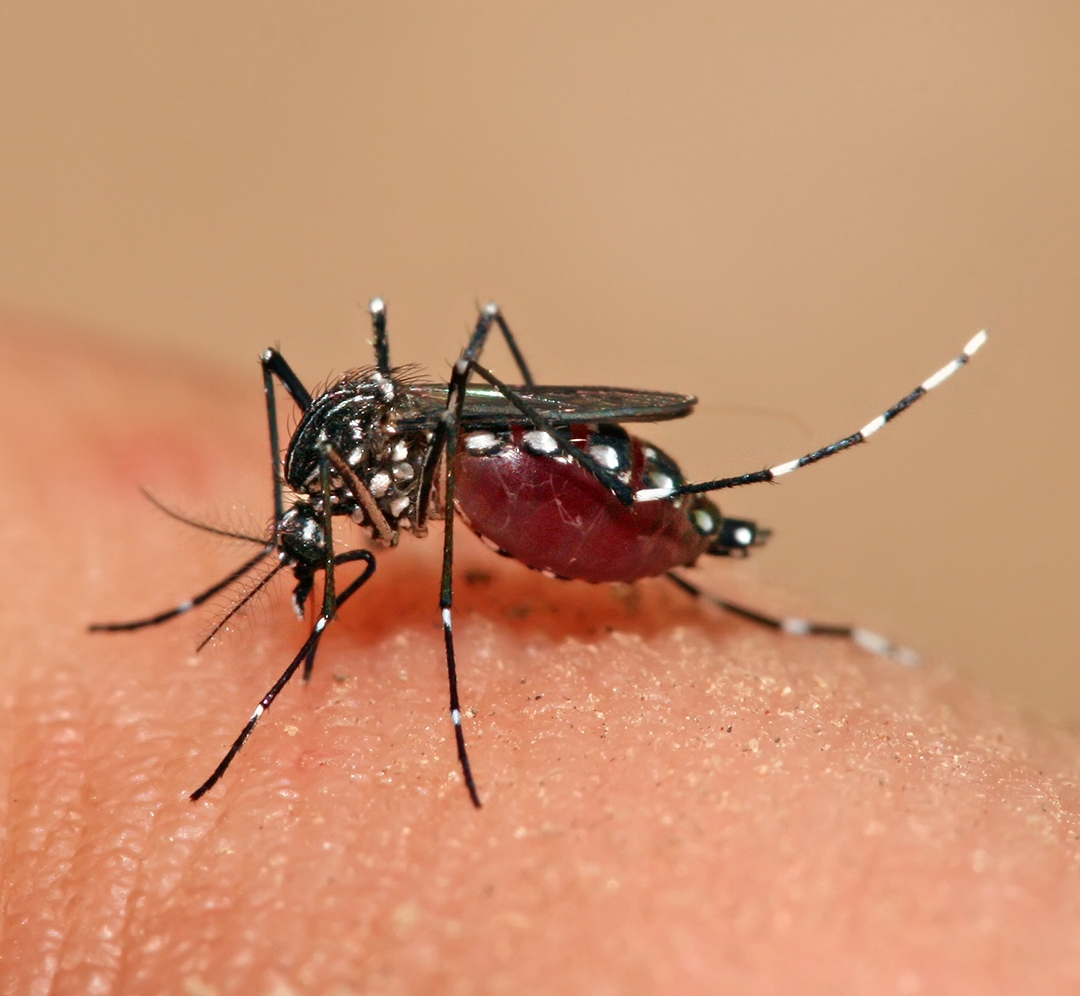
Mosquitoes of the Aedes genus can transmit viruses that cause dengue, Zika and chikungunya disease. Three diseases that have taken their toll in the Pacific region in recent years, with 95 outbreaks (68 dengue outbreaks, 12 Zika virus and 15 Chikungunya) reported between January 2012 and 13 May 2021.
Samoa experienced a chikungunya outbreak in 2015 and a dengue outbreak in late 2017.
According to the Communicable Disease Surveillance Bulletin – produced by the National Health Surveillance and International Health Regulations Division within the Samoa Ministry of Health, it stated that a total of 401 confirmed cases of dengue from January to December in 2018.
Furthermore, the manual is designed for programme managers, operational staff and collaborating partners responsible for planning, implementing, monitoring, and evaluating national vector control programmes.
The manual stated that Dengue is one of the fastest spreading mosquito-borne diseases.
"Worldwide, the incidence of dengue has increased 30-fold over the past 50 years.
"The current risk of dengue in the local area (including geographic extent of the outbreak) needs to be communicated.
"Everyone has a role to play in controlling Aedes-borne diseases – individuals, communities, businesses, governments and societies. Early medical attention must be sought if dengue-like symptoms are experienced."
A senior epidemiologist from S.P.C., Dr. Salanieta Saketa stated that currently there are no entomological surveillance systems targeting Aedes vectors in many Pacific Island countries and territories (P.I.C.T.) except for New Caledonia, French Polynesia and Fiji.
“This manual will guide P.I.C.T. to prevent and control Aedes- borne diseases,” said Dr. Saketa.
Additionally, W.H.O.’s Pacific Focal Point on Vector Surveillance and Control based in Vanuatu, Dr. Tessa Knox said that they hope this manual provides practical guidance for countries and territories of the Pacific region to develop actionable strategies in line with the Global Vector Control Response 2017-2030 and ensuring World Health Assembly resolutions, to prevent and contain Aedes-borne disease outbreaks - now and in the future.
Whereas, Lekon Tagavi in Vanuatu says that this manual is important for Vanuatu and the Pacific region as there has not been any specific guidance on how to address Aedes-borne diseases.
She added that, “We are glad to have this guidance from S.P.C. and W.H.O. to help us adapt the strategies for Aedes control.”
The P.P.H.S.N. is a voluntary network of countries and organisations dedicated to the promotion of public health surveillance and appropriate response to the health challenges of 22 Pacific Island countries and territories.




