



 Login
Login
 Subscribe
Head of State does not have ‘reserve powers’: academic
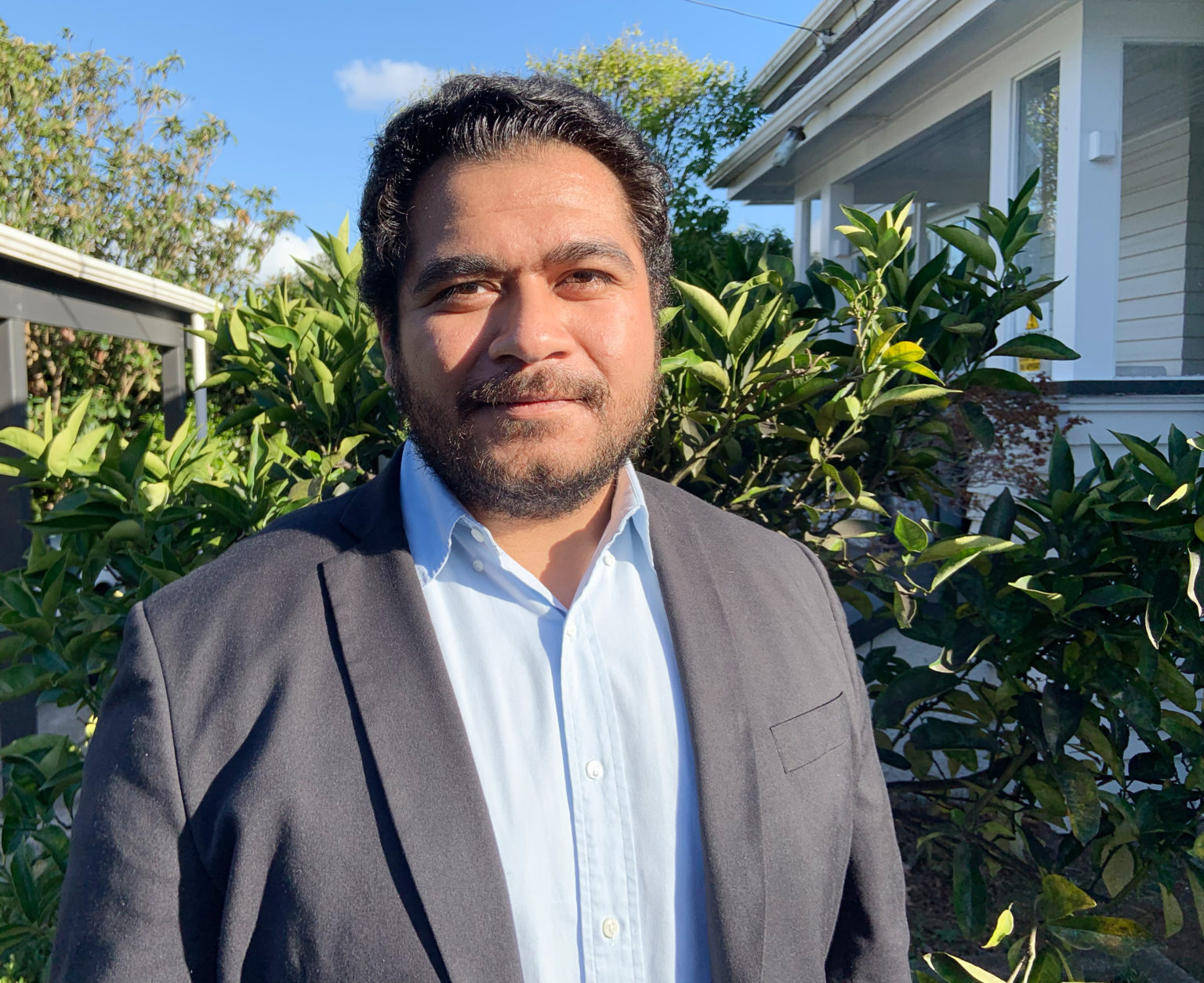
Samoan scholar and lecturer of law at the University of Auckland, Fuimaono Dylan Asafo says that the Samoa Head of State’s call for fresh elections is contrary to the rule of law and that the notion he has ‘reserve powers’ should be rejected.
Fuimaono holds a Master of Laws from Harvard University and a Master of Laws (First Class Honours) from the University of Auckland. He is a law lecturer at the Faculty of Law at the University of Auckland
Last week, fresh elections were announced by the Head of State his Royal Highness Tumalealiifano Vaaletoa Sualauvi II. It revokes the results of the general election held on 9 April, Fuimaono writes.
Counsel for the incumbent Human Rights Protection Party (H.R.P.P.), Aumua Ming Leung Wai, seeks to justify that declaration by arguing the call for fresh elections was lawful because they were exercising their 'reserve powers,' he added.
“The Attorney General is also likely to make the same argument, and they have indicated that they are likely to engage the services of a Queen's Counsel (a foreign lawyer whose work has been given special acknowledgement by the British Crown) to act or advise on the matter,” argues Fuimaono.
“In my view, this argument should be rejected, because the Head of State does not have any 'reserve powers'.”
He explains that in several democratic countries around the world, 'reserve powers' are powers that may be exercised by the Head of State at their discretion and without the approval of another branch of the government.
The 'reserve powers' can only be exercised in extreme and exceptional circumstances, Fuimaono states.
“'Reserve powers' get their name by being the 'reserve' or remaining residue of the original powers that the monarch (i.e. the British Crown) once had back when they were able to govern and rule arbitrarily, before democracy was introduced,” he said.
“Some key examples of 'reserve powers' include the power to dismiss a Prime Minister, and the power to refuse assent to legislation (as required). But the most relevant one here is the 'reserve power' to force dissolution of Parliament and call new elections when there is a hung parliament.”
This specific 'reserved power' was almost exercised by Queen Elizabeth II herself in the United Kingdom when there was a hung parliament in 1974, and could have potentially been exercised by the Governor-General of New Zealand (as the Queen's representative) in 1993 when it seemed there was a hung parliament before the results were eventually finalized, Fuimaono explains.
While most of the powers of the Head of State are laid down in a nation's constitution and legislation, these 'reserve powers' are not formally written down in any law.
Instead, they are just accepted and regarded to exist and be available to the Head of State in those extreme and exceptional circumstances, he said.
“In my view, the Head of State of Samoa does not have any 'reserve powers'. This is because there is clear evidence that our forebears who drafted and passed the Constitution at the Constitutional Conventions of 1954 and 1960, purposefully chose not to grant the Head of State any 'reserve powers', and made a deliberate and intentional effort to explicitly spell out the powers of the Head of State in the Constitution,” said Fuimaono.
He adds that aside from being an egregious violation of the basic principles of constitutional interpretation and the rule of law, in Fuimaono’s view, to grant the Head of State 'reserve powers' would be to unapologetically betray the wishes and wisdom of our forebears.
“By finding that the Head of State has powers deriving from the British Crown, such a decision would undermine the distinct Indigenous royalty held by the highest titles in Samoa in their own right, and also deny the people of Samoa the opportunity to develop and "grow" 'reserve powers' or "unwritten conventions" into written constitutional provisions "over time" in the uniquely Samoan way envisioned by our forebears,” Fuimaono said.
“By extension, I believe this would undermine the independence of Samoa and dishonour the sacrifices of the Mau movement and all Samoans who lived and suffered under New Zealand's colonial rule. In my previous analysis of the legality of the Head of State's declaration, I didn't mention that it could be argued that the Head of State was acting under the authority of any 'reserved powers' because, to be frank, this argument is far-fetched, implausible, disingenuous and more importantly, harmful in seeking to undermine Samoa's independence. Indeed, the Head of State themselves didn't say they were using any 'reserved powers' in their declaration.”
“In my view, this indicates that they either did not know what 'reserved powers' were at the time they made their declaration, or they knew very well that they did not have such powers, but wanted to try to exercise them anyway. Either way, the Head of State was attempting to exercise power in a way that is arbitrary and contrary to the rule of law.”




