



 Login
Login
 Subscribe
Savai'i mother urges Japanese Govt. to reconsider "dumping nuclear waste in Pacific.
 By Sialai Sarafina Sanerivi
•
21 April 2021, 1:20PM
By Sialai Sarafina Sanerivi
•
21 April 2021, 1:20PM
A single mother from Savai'i, with a serious health condition, has expressed her concerns regarding the news that the Japanese Govt has decided to release 1 million tonnes of contaminated water from the damaged Fukushima nuclear power plant into the Pacific.
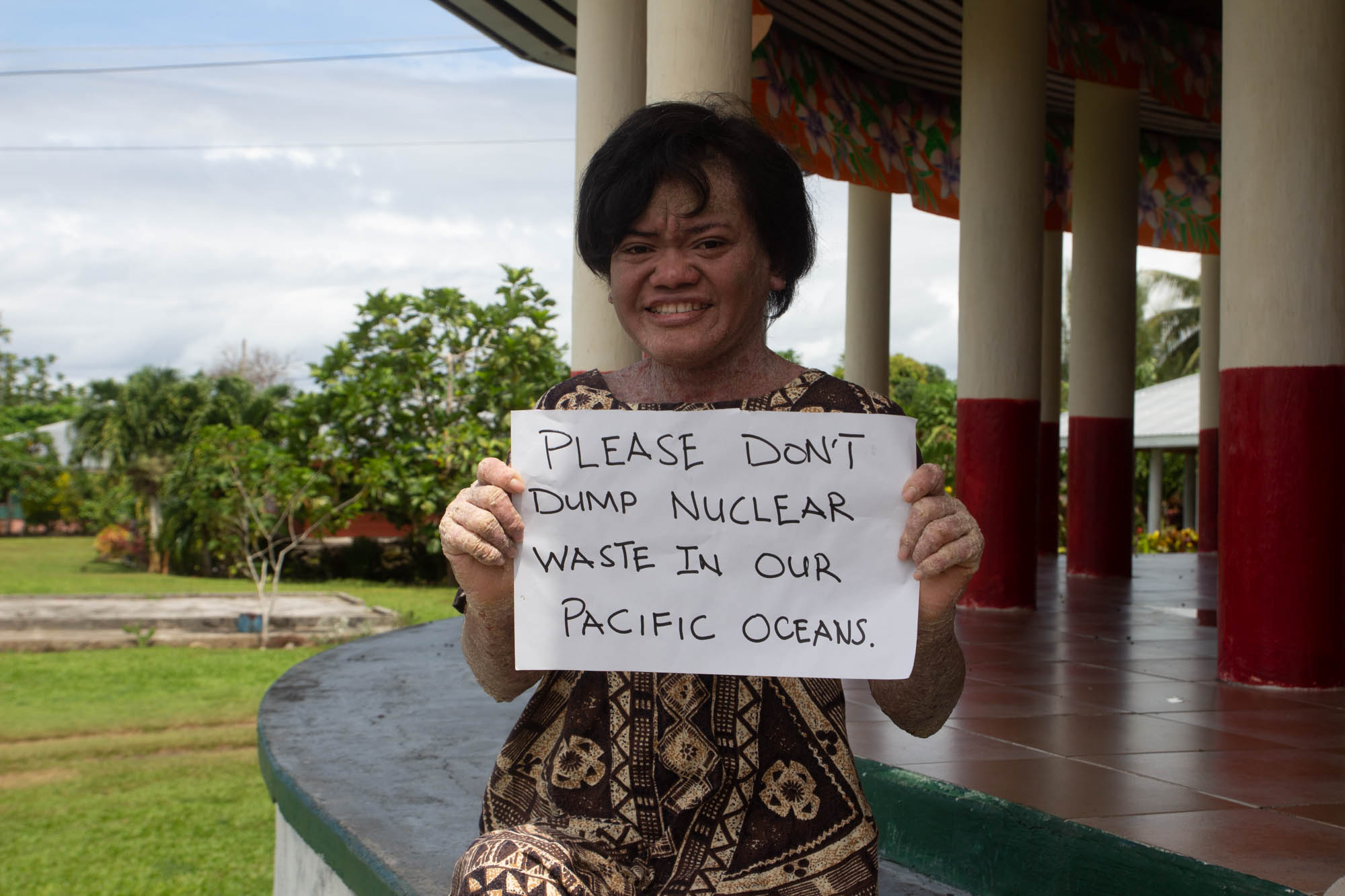
Ana Maria Lui from Poutoā Sapapali'i, Savai'i has turned to the media to voice her concerns after reading about the Japanese ocean release.
The 39-year-old single mother has appealed to the Japanese government to hold off from discharging nuclear waste into the Pacific Ocean from the Fukushima power plant that was destroyed by a tsunami in 2011.
Japan had announced recently that it will release contaminated water from the Fukushima nuclear power plant into the sea, which is a decision that comes more than a decade after the nuclear disaster.
Work to release the diluted water will begin in two years and the process is expected to take decades.
"I love nature and nature plays a big part in our daily lives, including the sea that surrounds us. The sea is what connects many countries, and Pacific islands," Ms. Lui told the Samoa Observer.
"Our Pacific islands rely on the ocean for food and also helps develop our economies. It is life for our people, not just nowadays, but also for future generations.
"I felt like, I had to speak up and voice my opinions against the initiative not only as a Samoan but also as a Pacific Islander."
Ms. Lui also used the opportunity to call onto the leaders of Samoa and the heads of government Ministries who are responsible for looking after our environment to "do their part."
"Japan has NO right to dump its nuclear waste into our Pacific oceans. Other island leaders have raised their concerns, I call on Samoas leaders to do the same, for the sake of the people.
"They should do their part; they should not be scared to speak up for what is right for our people and the Pacific.
"I am doing my part by speaking up and I hope our leaders will do the same by being courageous and speak up against this plan as it will affect our oceans."
Ms. Lui is also hoping to see citizens of Samoa and Pacific islanders speaking up against the issue.
"I know there are other people out there who are passionate about protecting our environment and our natural resources, like myself.
"And we need to come together and voice our concerns about this plan so that they (Japanese govt.) would hear or see our concerns and maybe have a change of heart.
"We need to speak up and be able to voice our concerns so that they know that we do not take these things lightly. We care about our environment and we want to protect it not only for us but for our future generation."
Ms. Lui was born with Icthyosis and is a stay home mom.
In a story published by the Samoa Observer on Sunday this week, the Samoa Conservation Society (S.C.S) President James Atherton, expressed concerned about Japan's decision and called for an independent assessment on the issue.
S.C.S President James Atherton told the Samoa Observer in a telephone interview on Friday that the decision itself sounds terrible until people start doing a little more research on the issue.
"Of course we have concerns but the way it is been described and reports that are written, much of the contaminated radioactivity is going to be removed from the water before it is discharged," Mr. Atherton said.
According to him, there are a couple of things that people need to bear in mind, saying that it seems like it is a common practice in the nuclear energy sector.
"First of all it seems that this is common practice in the industry, in the nuclear reactor industry in fact it may not be the worst case but that does not make it right of course," he said.
He explained that his main point is that there should be an independent assessment of this before it happens and he agreed with the appeal by the Pacific Islands Forum for the plan to be deferred.
Mr. Atherton said just by reading articles on the position of Japan's government, their argument is that it is common practice and all radioactivity except tritium will be removed, which according to him would have a relatively low radiation impact.
He added that the way they are arguing is that the water that they are going to release is going to be diluted so much that it is not going to be an issue.
"Now bearing in mind that the first country that's going to get impacted by any issue with radioactive waste is Japan themselves so it would not be in their interest to do something that is going to screw up their own country and their fishing industry and so forth so you got to bear that in mind," he said.
Mr. Atherton added that hopes that the Japanese would be concerned about their own people and would want to do the right thing, saying the public should be careful not to get too emotional about what appears to be a disastrous decision.
"We need to understand a bit more about what are the true impacts, further emphasising the need for an independent assessment by a neutral group.
"It's two years for that to happen. In that time maybe there will be improvements in how we maybe make that water completely safe in that timeframe hopefully.
"There's still time to improve the science on this, the technology on this."
Mr. Atherton is of the view that there has been an overreaction in certain quarters without necessarily understanding more about it.
He said the Government of Samoa should be concerned and asking for an independent study while emphasising that experts' opinions are needed on this issue.
"If the Japanese are confident at what they are doing is going to have a minimal impact then they should be happy to have an independent assessment done," he said.
"If they are not happy with that then there may be a sign that they are hiding something."
Japan shouldn't be condemned as other countries have done similar activities and he then made reference to the testing by the French, British, and the Americans which was worse than the current situation.
Moreover, the outgoing Pacific Islands Forum (P.I.F) Secretary-General, Dame Meg Taylor issued a statement on Tuesday last week, calling for a halt to the decision.
"In my capacity as Depositary of the South Pacific Nuclear Free Zone Treaty (Treaty of Rarotonga), as Pacific Ocean Commissioner, and on behalf of the Council of Regional Organisations in the Pacific: we note, with deep concern, the decision by the Government of Japan to discharge the Advanced Liquid Processing System (ALPS) Treated Water from the Fukushima Daiichi Nuclear Power Station into the Pacific Ocean, and wish to highlight and reiterate the position of the Pacific Islands Forum region in relation to this matter," she said in a statement.
"For decades, Forum Leaders have expressed strong concern regarding nuclear legacy issues. At their last meeting in 2019, Leaders expressed concern for the significance of the potential threat of nuclear contamination to the health and security of the Blue Pacific, her people, and prospects."
Japan's government decided to start releasing massive amounts of treated radioactive water from the wrecked Fukushima nuclear plant into the Pacific Ocean in two years — an option fiercely opposed by local fishermen and residents.
The decision, long speculated but delayed for years due to safety concerns and protests, came at a meeting of Cabinet ministers who endorsed the ocean release as the best option.
The accumulating water has been stored in tanks at the Fukushima Daiichi plant since 2011 when a massive earthquake and tsunami damaged its reactors and their cooling water became contaminated and began leaking.
The plant's operator, Tokyo Electric Power Co., says its storage capacity will be full late next year.
Prime Minister Yoshihide Suga said the ocean release was the “most realistic” option and that disposing of the water is “unavoidable” for the decommissioning of the Fukushima plant, which is expected to take decades.
T.E.P.C.O. and government officials say tritium, which is not harmful in small amounts, cannot be removed from the water, but all other selected radionuclides can be reduced to levels allowed for release. Some scientists say the long-term impact on marine life from low-dose exposure to such large volumes of water is unknown.
Under the basic plan adopted by the ministers, TEPCO will start releasing the water in about two years after building a facility under the regulatory authority’s safety requirements. It said the disposal of the water cannot be postponed further and is necessary to improve the environment surrounding the plant so residents can live there safely.




