



 Login
Login
 Subscribe
$1.8M worth of weather systems launched

Samoa has strengthened its weather forecasting and climate monitoring capacity with the launch of new automated weather stations, climate information systems and operational resources worth around $1.8 million.
This was done under the European Union-funded Intra-ACP Climate Services and Related Applications (ClimSA) Programme.

The Samoa Meteorological Services installed four new Automated Weather Stations across the country, with another three stations currently being set up to strengthen Samoa’s nationwide weather network. The stations automatically collect and transmit real-time information on rainfall, temperature, wind speed and direction, humidity and atmospheric pressure, sending data directly to the Samoa Meteorological Services to improve the accuracy and speed of local forecasts and severe weather warnings.
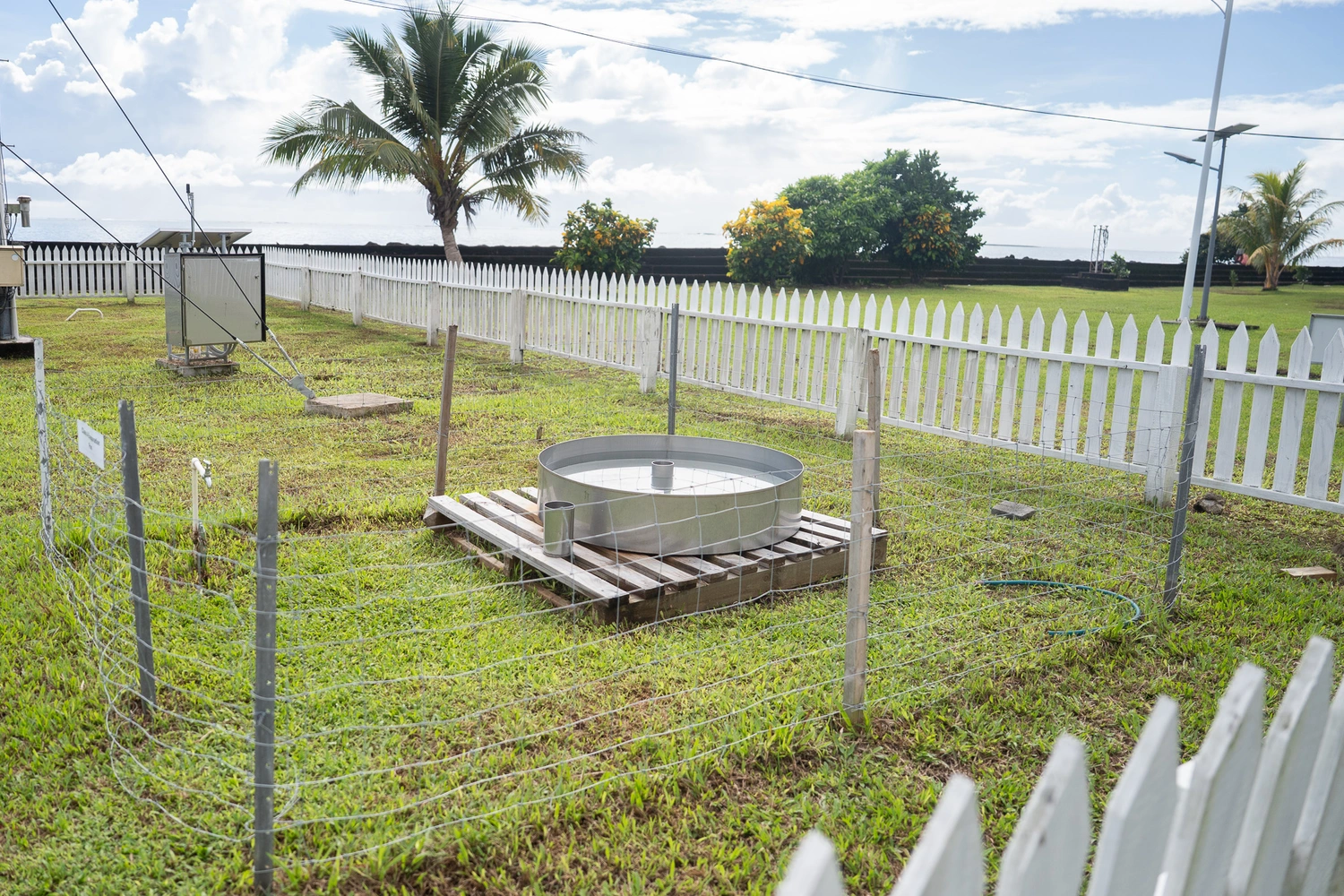
Minister for the Ministry of Natural Resources and Environment, Ale Vena Ale, said the launching of the new systems and resources, including automatic weather stations, the meteorology mobile application, statistical information board and operational vehicles, represented “a significant investment towards improving climate care services, public access to weather information and operational capacity within Samoa’s Meteorological Division.”
“These tools will help strengthen our ability to monitor weather and climate conditions, provide timely warnings and improve communications of critical information to the public,” he said.
Ale said the programme also included exhibition tours for students and members of the public to showcase the work of the Meteorological Division and inspire greater awareness and interest in weather, climate science and disaster preparedness.
SPREP Director General Sefanaia Nawadra said the handover marked more than $1.8 million in climate and meteorological investments delivered to the government of Samoa through the Samoa Meteorological Division.
“These investments have been made possible through the generous funding of the European Union delivered under the Intra-ACP Climate Services and Related Applications Programme, more commonly known as ClimSA, which is implemented in the Pacific by SPREP,” Nawadra said.
He said Samoa was already experiencing the impacts of climate change, including hotter days and nights, shifting rainfall patterns, heavier downpours, flash flooding, rising sea levels and coastal erosion threatening villages, roads and essential services.
“Samoa’s ability to monitor and respond to changing weather conditions has just received a major upgrade through ClimSA,” he said.
Nawadra said the programme also rehabilitated 10 existing weather stations, installed new sensors and automated rain gauges, procured smart mooring buoys for ocean monitoring, improved communication of climate and weather information through the mobile application and installed an information billboard.
A dedicated vehicle was also handed over to support the maintenance and sustainability of the new assets.
“We in the Pacific are often known for breakdown maintenance,” Nawadra said. “I hope that with the vehicle we can teach ourselves that we have to have program maintenance so that the investments that have been made can be sustained and maintained over time.”
He said ClimSA had also invested in people and institutional capacity through specialised meteorological training, climate outlook forums, data rescue and digitisation activities to preserve Samoa’s historical climate records and scholarship support to strengthen national climate leadership and expertise.
European Union Deputy Head of Delegation Nereo Penalver Garcia said the installation of the remaining three weather stations was already underway to further extend Samoa’s coverage and reinforce the country’s commitment to building “a safer, more climate-resilient future.”
“The cost of climate-related disasters in this region is documented and growing,” Garcia said.
He cited Tropical Cyclone Evan in 2012, Cyclone Gita in 2018 and flash flooding in Apia in 2020 as examples of disasters that caused major damage in Samoa.
“Better data leads to better decisions and better decisions lead to saving lives,” Garcia said.
He said the new observation systems also contributed to the United Nations Early Warning for All initiative, which aims for every person on Earth to be protected by early warning systems by 2027.
Garcia said public-facing systems launched during the handover, including the climate and weather application, information billboard and display screen, would help ensure climate information reached communities, families and individuals.
“Smarter adaptation requires climate information that is visible and easily accessible,” he said.




