



 Login
Login
 Subscribe
Museums key to reviving tradition: Galumalemana

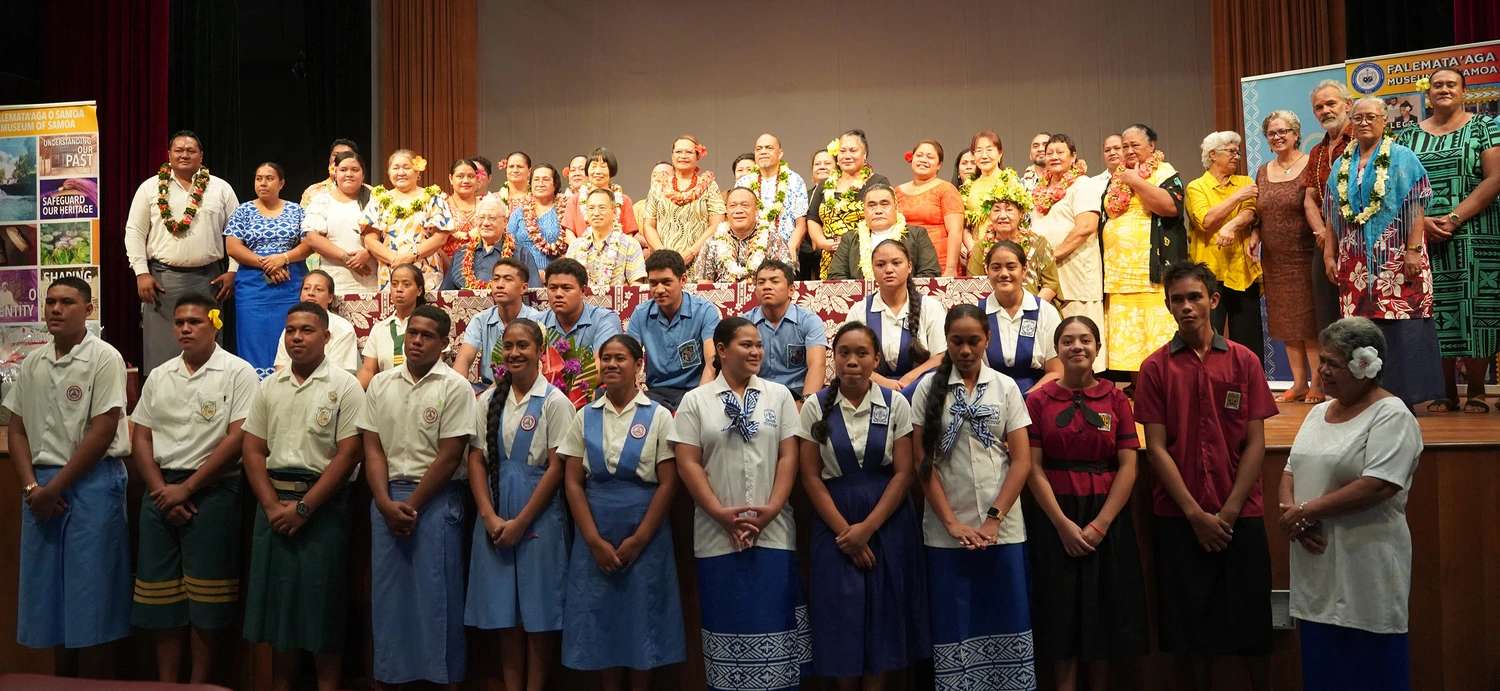 Cultural identity is being lost because traditional practices are declining, but that is where the museums come in, said Galumalemana Steven Percival of the Tiapapata Art Centre, as International Museum Day was celebrated in Samoa this week under the theme “Museums Uniting a Divided World”.
The role of museums in promoting cultural understanding and protecting heritage was highlighted.
Galumalemana presented how museums, community learning spaces, artisans, researchers, schools, and cultural institutions can work together to protect and transmit knowledge that remains vital to Samoan identity.
Galumalemana highlighted two words relevant to the theme he had delivered: sogasogā, which he interprets as “spirit of inquiry,” and mou, a word that describes a practice or object that is in decline to the point of loss.
“Many of the practices we are reviving at Tiapapata are in decline, and some have even become obsolete,” said Galumalemana. “When we lose the practice, we lose language, and when language is lost, we lose a part of our cultural identity.”
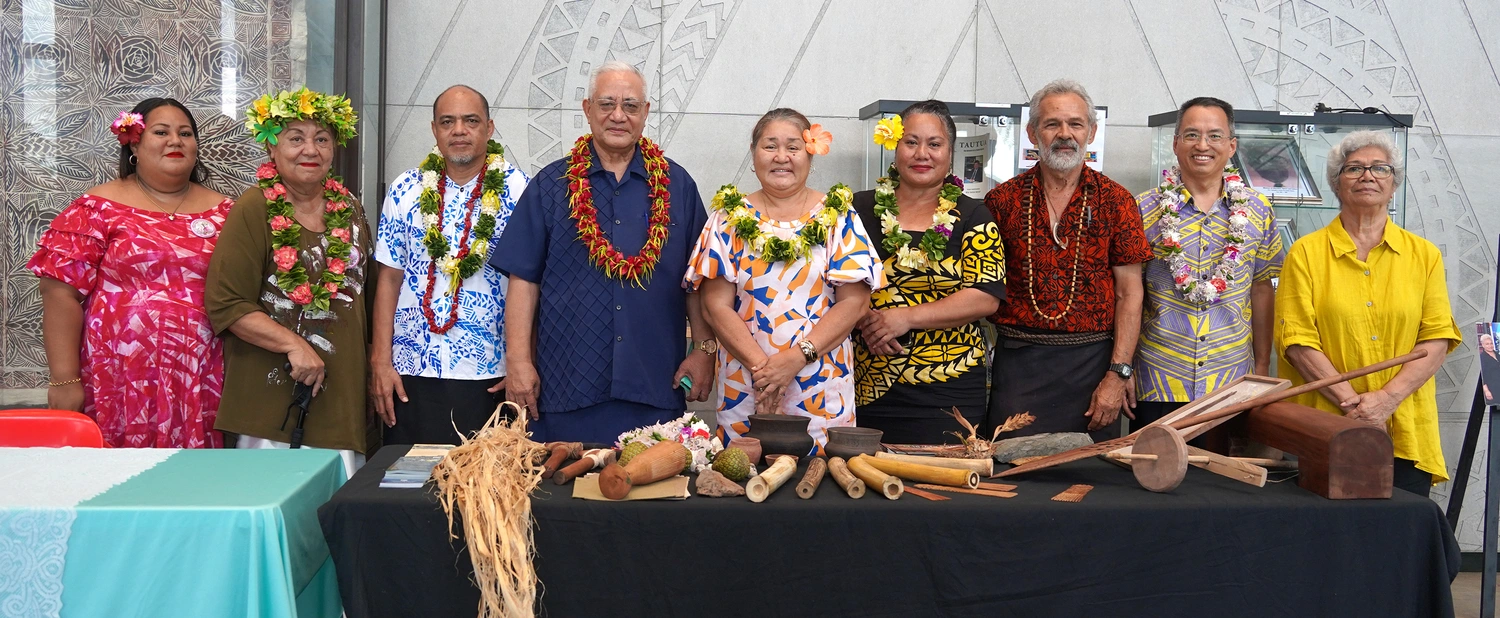
He said the gifted objects convey stories, relationships, and memories of materials and practice. To illustrate the connection between objects, language, architecture, and cultural memory, he cited an interesting proverb, “Mapu i sasaga, asu o fa‘a-matua.” He heard the proverb from Lea‘anā Tuigamala Suiselani, one of the senior builders in the team he led to construct a Samoan faletele at the Little World Museum of Man, an architectural museum located in Aichi Prefecture, Japan.
The saying refers to an architectural feature and fire pit once common in Samoan fale. The sasaga is the cross member on the central posts of a faletele, commonly known as the va‘a or canoe, because of its shape. Asu o fa‘a-matua refers to the smoke rising from the large log in the magālafu, or firepit, whose embers burn through the night. The plume of smoke can be thick, but it dissipates when it strikes the sasaga. Such a saying can be used in oratory to restore calm in a heated debate.
Many of the objects gifted to the Museum emerged from the Upu ma Tala Heritage Talanoa Series, implemented with support from UNESCO, made through talanoa, experimentation, and collaboration with knowledge holders. They now enter the Museum of Samoa as evidence that heritage is not only preserved from the past, but can be renewed in the present.
The International Museum Day presentation drew on long-standing work at Tiapapata in researching, documenting, and supporting the transmission of Samoan cultural knowledge through film, photography, oral history, talanoa, field trips, public engagement, and hands-on practice.
The work at the Centre also demonstrates how digital technologies can strengthen heritage safeguarding. High-resolution photography, video documentation, 3D photogrammetry, 3D modelling, and 3D printing are being used to record, study, and share Samoan material culture. These tools allow objects and processes to be documented in ways that support education, museum interpretation, research, and access for audiences far beyond Samoa.
One of the most compelling examples is the revival of the fagufagu.
"In 1892, Robert Louis Stevenson recorded hearing a Samoan nose flute played softly before dawn while staying with Mata‘afa Iosefo, who explained that it was played “to give good dreams.” More than a century later, artificial intelligence has been used to interpret Stevenson’s written musical notation, allowing contemporary listeners to hear an approximation of what Stevenson may have heard in Samoa in 1892," Galumalemana said.
"This convergence of archival record, indigenous musical knowledge, AI interpretation, and contemporary craft practice shows how new technologies can help recover and reanimate fragile traces of the past."
A fagufagu made by Galumalemana is also expected to be featured in Museums in the Metaverse, an initiative of the University of Glasgow.
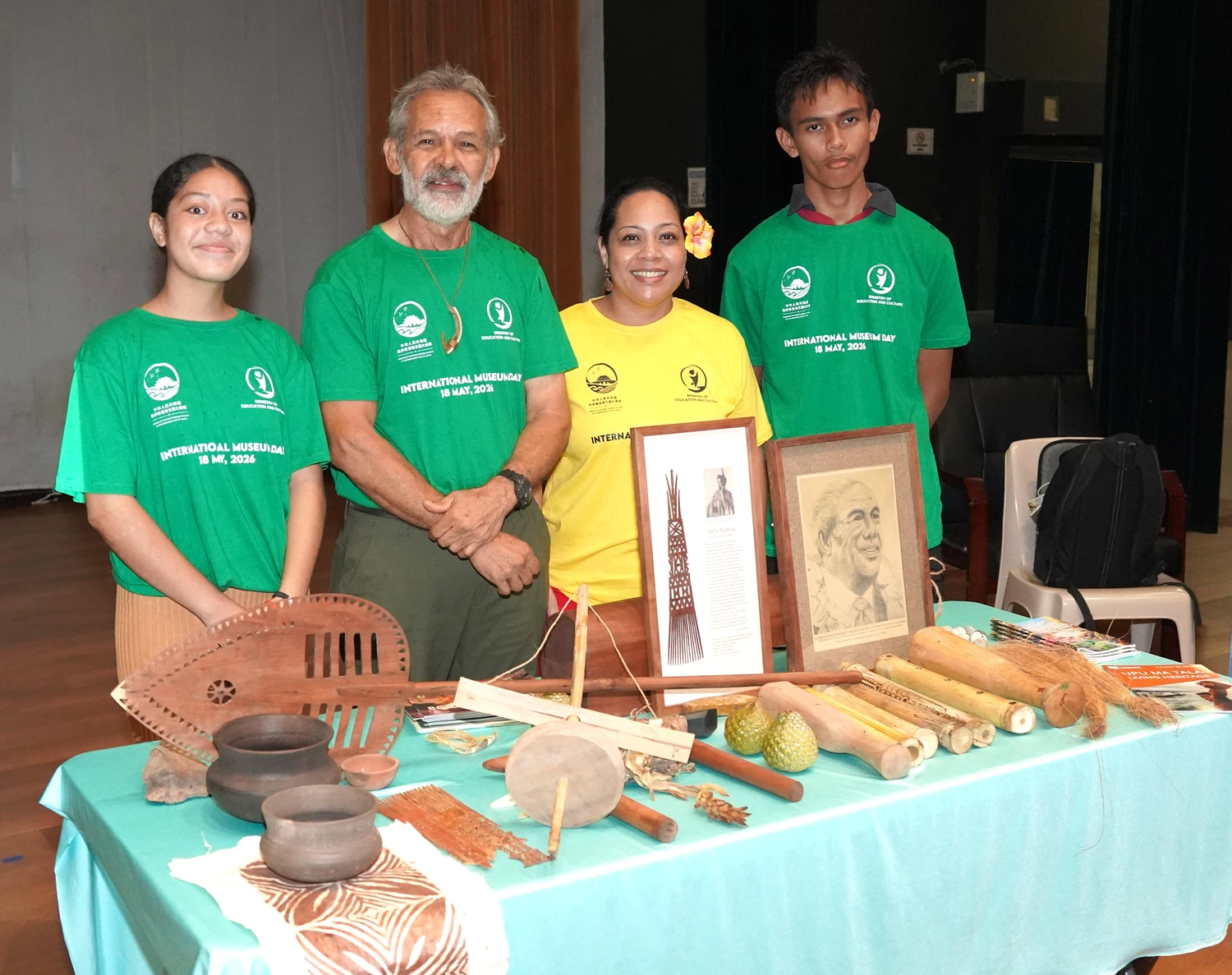
The gifted fagufagu represents the revival of one of Samoa’s rare musical instruments. The pā-alo-atu reflects the sophisticated engineering, marine knowledge, and aesthetic skill of Samoan fishing traditions. The ipu ‘ele connects contemporary makers with Samoa’s ancient ceramic heritage and the wider Lapita tradition. The tools for siapo and ‘afa making, together with the unfinished siapo, cordage samples, and lama seeds, help document not only finished cultural forms, but also the materials and processes through which they are made.
“This work does not end with the donation,” Galumalemana added. “When young people see a nose flute, a bonito lure, a stone adze, a pottery vessel, or the tools used to make siapo, they are not only seeing an object. They are seeing ancient knowledge, and a pathway forward into creativity, confidence, and cultural continuity.”
He ended his presentation by noting that museums can only help unite the world if people also embrace the diversity that makes cultures distinct.




