Login
Login
 Subscribe
Vulnerable families and leaving no one behind
 3
3
There is a famous quote by a former U.S. politician which emphasised the need for governments having a moral responsibility to address the plight of the society’s most vulnerable.
Speaking at the dedication of a building in the U.S. in November 1977, America’s former vice president Hubert Horatio Humphrey (1911–1978) set the benchmark for future governments with this quote:
“It was once said that the moral test of government is how that government treats those who are in the dawn of life, the children; those who are in the twilight of life, the elderly; and those who are in the shadows of life—the sick, the needy and the handicapped.”
Close to 45 years after the then American politician uttered those words, they are still relevant today as they were then.
So it is good to see the new Fa’atuatua i le Atua Samoa ua Tasi (F.A.S.T.)
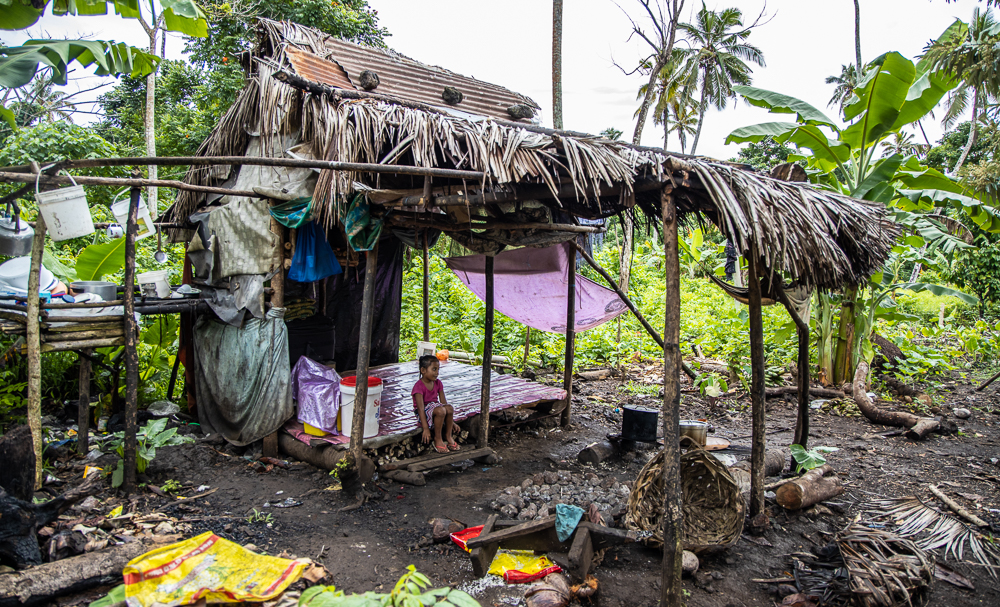
Government aspiring for those greater heights, to assist Samoa’s most vulnerable families overcome their daily challenges, which over the long-term will address their housing, hygiene and sanitation deficiencies.
The Minister of Finance, Mulipola Anarosa Ale Molioo put pen to paper on Friday – which formalised the allocation of $2 million tala from the Government’s 2021/2022 Budget to support the Shelter and Hygiene Facilities Programme – targeting Samoa’s most vulnerable families.
The programme will be implemented by respected civil society organisations Adventist Development and Relief Agency (A.D.R.A.) and Caritas Samoa with Friday’s agreement signing formalising the three-way partnership.
According to an article (Government gives $2 million for vulnerable families’ housing) in the Saturday 5 February 2022 edition of the Weekend Observer, the programme’s outcomes include the building of new homes for vulnerable families, the construction of proper sanitation facilities, and the connection of water to the new houses.
Minister Mulipola announced the Government’s commitment to the programme to change the lives of vulnerable families.
“The Government is fully committed to continue this programme as it is in line with the Government’s strategic priorities and ensuring that the most vulnerable in our communities are provided the assistance in improving their homes and livelihood during these unprecedented times.”
Friday’s agreement signing was a small step for the Government to tick those critical boxes to improve family-focused shelter, hygiene and sanitation facilities in the community – and a giant step towards changing lives for the better for families, who at most times are forced to live from day to day on meagre incomes or depend on their plantations or the generosity of their extended families.
We can already imagine the health outcomes, thanks to this intervention by the Government, which should see the recipient families overcome a range of health conditions including respiratory infections as well as diseases triggered by poor sanitation such as cholera, hepatitis A, typhoid and polio.
This newspaper has been at the forefront over the years – bringing gut wrenching stories and pictures of the challenges ordinary Samoan families face to our readers, through the Village Voice column – not to add to their misery, but to alert the community to their plight, and more importantly make Government aware there are gaps in their policies that affect men, women and children and should be rectified.
Amidst these interventions by the Government, for which it deserves commendation, we note with concern the predicament of Apia-based street vendors. Whose lives have become all the more difficult, following the Government’s decision the previous Friday to downgrade its COVID-19 Alert to Level 2.
A story (Vendors struggle with Level 2 restrictions) in the Friday 4 February 2022 edition of the Samoa Observer revealed the challenges street vendors face daily after the revised State of Emergency (S.O.E.) Orders came into force to complement the Government’s Alert Level 2.
A street vendor, Auimatagi Setu of Malie, told this newspaper how the restrictions made life difficult for him and his peers and his disappointment at the broad enforcement of the S.O.E. Orders.
“We are not all the same and it shouldn’t be assumed that we fall under the same category as the medium and small businesses,” said the 48-year-old vendor.
“The reality is we earn a small fraction of what the small businesses make.
“We take the goods to people because of that and what we make is just enough to buy butter and sugar for the day.”
Now that is an example of a gap in the Government’s policy that should be immediately rectified as it is resulting in families being financially disempowered and not being able to feed their children.
The story of Apia’s street vendors has been well documented over the years and it is an issue that continues to divide public opinion. But first things first: there are family members going hungry due to their lack of daily access to income-generation opportunities brought on by the COVID-19 Level 2 restrictions.
Surely, the Ministry of Women Community and Social Development can intervene on behalf of the affected families?
Revising the S.O.E. Orders would be a tall order in the current circumstance with Samoa’s current 31 active COVID-19 cases, but organising access for street vendor families to food rations for the duration of the restrictions could be the way to go.
Ultimately we are all in this together: let us work to ensure no one is left behind.
Tags