Login
Login
 Subscribe
Enough of the talk and give Apolima a new wharf
The importance of public infrastructure in Samoa such as airports, roads, bridges, and wharves cannot be downplayed as they can become economic lifelines for a nation that recently wilted under the weight of the COVID-19 pandemic.
Over a year after the reopening of Samoa’s international borders, total visitor numbers to the country confirm that the rebuilding of Samoa’s economy is underway with data from the Samoa Bureau of Statistics (SBS) released last week showing over 23,000 arrivals recorded for the month of June 2023.
The benefits of playing host to a high number of international visitors are trickling down to Samoa’s tourism and hospitality sector with recent reports from Savai’i tourism operators pointing to a high demand and room shortages.
Unfortunately, not everyone will be able to benefit from the economic rewards that could flow from a rebuilt Samoan economy, due to the dilapidated state or non-existence of key infrastructure such as roads, bridges, and wharves. Their ability to participate in nation rebuilding or even access basic goods and services – which as citizens is their right under Samoa’s Constitution – is being constrained by the poor state of their local infrastructure.
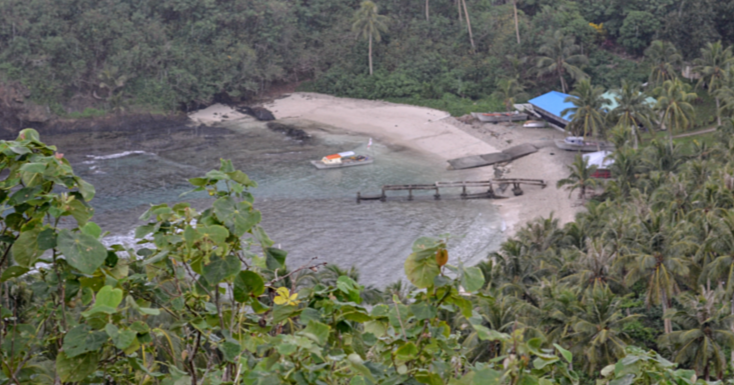
We believe the residents of Apolima Island, with its 10 families and a total population of 81 people, are constrained from reaching their full potential as citizens and a community due to the gradual destruction of their island’s wharf.
Having reported on this story previously, information from the island’s residents suggests that the cement wharf started falling apart in 2014, with the former Human Rights Protection Party (HRPP) Administration not making any moves over the subsequent seven years that followed to allocate funding for repairs and maintenance before the change of government in 2021.
Over two years after the election of the Fa’atuatua i le Atua Samoa ua Tasi (FAST) Government and we are not even sure today whether the plight of the people of Apolima Island will be addressed.
In an article (Apolima mayor laments wharf promise) published in yesterday’s edition of the Samoa Observer, Apolima Island village mayor Leala Afe Solo told this newspaper that the current Administration is yet to allocate SAT$200,000 which was promised for the construction of a new wharf.
"It's not part of the $1 million district project, just to be clear, we were promised $200,000 when the new Government just took office and it was announced in parliament by the new Government during the first parliament session after the general elections," he said. "We're still waiting for that allocation, we still haven't received any information yet on where that is heading."
The Aiga i le Tai M.P. Auapaau Mulipola Aloitafua – whose constituency covers Apolima Island – has denied making such a statement in the Legislative Assembly, promising to allocate $200,000 when the current parliament held its first sitting following the 2021 general election, and blatantly told this newspaper that it had no right to report on projects within his constituency.
Obviously, the M.P. Auapaau needs a crash course on the role of the media in Samoa, and the need for him to be accountable to voters in his constituency, through news coverage provided by this newspaper or any other media organisation. As a member of the FAST party, he must remember his party had transparency, accountability and good governance at the centre of the party manifesto, which means he is obligated to respond to media queries on projects within his constituency including statements made in the Parliament, as a form of accountability to his voters and supporters.
But let’s put all these to one side because the crux of the matter is that the residents of Apolima deserve answers from the M.P. Auapaau and the current FAST Government on the $200,000 promised to rebuild their wharf and when do they expect that to happen. Is this a project that the Minister of Works, Transport and Infrastructure, Olo Fiti Afoa Va'ai should also have oversight of?
As we mentioned earlier in this editorial, public infrastructure such as airports, roads, bridges, and wharves are economic lifelines that can transform people’s lives for the better and right now there are 10 families (of about 81 people) living in an isolated island who’ve been denied their rights since 2014 to economically empower themselves. Let’s give the people the tools to enable them to contribute to nation-building, building a new wharf will go a long way in enabling them to tick that box for themselves, their families, and the nation.