Login
Login
 Subscribe
Districts should invest in school fees in 2023/24
The Fa’atuatua i le Atua Samoa ua Tasi (FAST) Government’s 2023/24 Budget is currently before the Parliamentary Finance and Expenditure Committee for its deliberation before it is returned to the Legislative Assembly for debate.
The Ministry of Women, Community and Social Development (MWCSD) got the biggest increase in the new budget with the allocation for 2023/24 now totalling SAT$14 million. The increase in funding is to cater for the current Administration’s popular $1 million District Development Project.
With the money plan for the next financial year yet to go before the Parliament, we hope the committees of the various districts have met or will be meeting, to look at submitted community-focused project proposals that the constituency’s $1 million grant could consider funding in 2023/24.
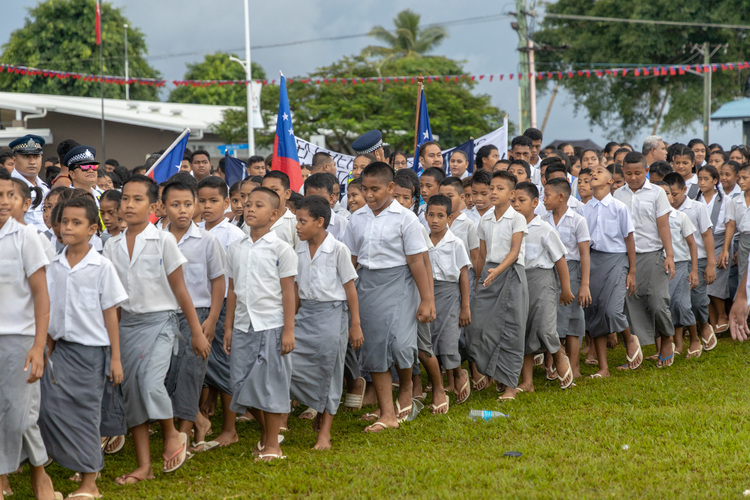
Education – through the funding of school fees for children from less well-to-do families – should be at the top of the list for all districts in Samoa. We say this against a backdrop of poor indicators in Samoa’s education sector. Student retention rates in primary and secondary schools in Samoa are very low with education authorities struggling over the years to keep students in the classroom.
A Samoa Government-sanctioned report, Samoa’s Second Voluntary National Review commissioned in 2020 and released a year later, found that the secondary school completion rate declined between 2016–2018 for Year 12 (from 62.65 per cent to 54.1 per cent) and Year 13 (from 71.4 per cent to 35.95 per cent) for both male and female students.
The low completion rate for Year 13, which was a decline from 44.4 per cent in 2016 to 35.95 per cent in 2018 is a concern, the report emphasised. It also noted the completion rate among females was higher for both Years 12 and 13 than for males. The report also looked at the transition rate from Year 13 to post-secondary education and training (P.S.E.T.) which it found increased from 68 per cent in 2015 to 69 per cent in 2017 and 2018. The report also highlighted a high dropout rate for students in Years 11–13 from 20 to 24 per cent (Year 11) and 24 to 30 per cent (Year 13) between 2015 and 2019.
We believe the worsening economic status of many families – following the country’s economic meltdown brought on by the COVID-19 pandemic in early 2020 – would have only worsened the plight of thousands of students and forced them to abandon classes to assist their parents put food on the table.
This is why the different constituencies should consider setting aside funding out of their $1 million grant, which would specifically fund school fees for children, who come from impoverished families that lack the capacity and resources to earn a living or generate some form of income.
We are aware of only one constituency, which decided early this year to take the school fee burden off struggling parents and pay for their children’s fees. The Faleata No. 4 constituency allocated SAT$50,000 in the current financial year to settle the fees for children from struggling parents as well as child street vendors. The Faleata No. 4 Member of Parliament, Ale Vena Ale was quite forthright in his views on the significance of funding school fees, saying: “An overview by the committee of the constituency, we see that the long-term development is through the education of our latest generation.” Ale has promised to also allocate funding in the new financial year.
Looking at the nuts and bolts of nation-building, you can never go wrong if you invest in the education of your people. This is why we believe Faleata No. 4 is on the right track by already agreeing to make an allocation in the new financial year. We can only hope that the $50,000 grant allocation becomes a permanent annual budgetary allocation by the constituency.
What about the other districts in Samoa? What is the economic status of families in your constituencies and are they able to afford school fees which continue to rise annually?
The impact of the pandemic on Samoa’s economy was felt throughout the length and breadth of this nation, forcing a lot of families into poverty and compelling family members to make hard choices between putting food on the table or ensuring proper education for the children. There is no need for families to subject themselves to that balancing act when $50,000 in public funding is being gifted annually to the constituencies for community development projects. Education is a right and let us not deny our children that right to empower themselves through learning and gaining new knowledge.