Login
Login
 Subscribe
Less talk and more action please
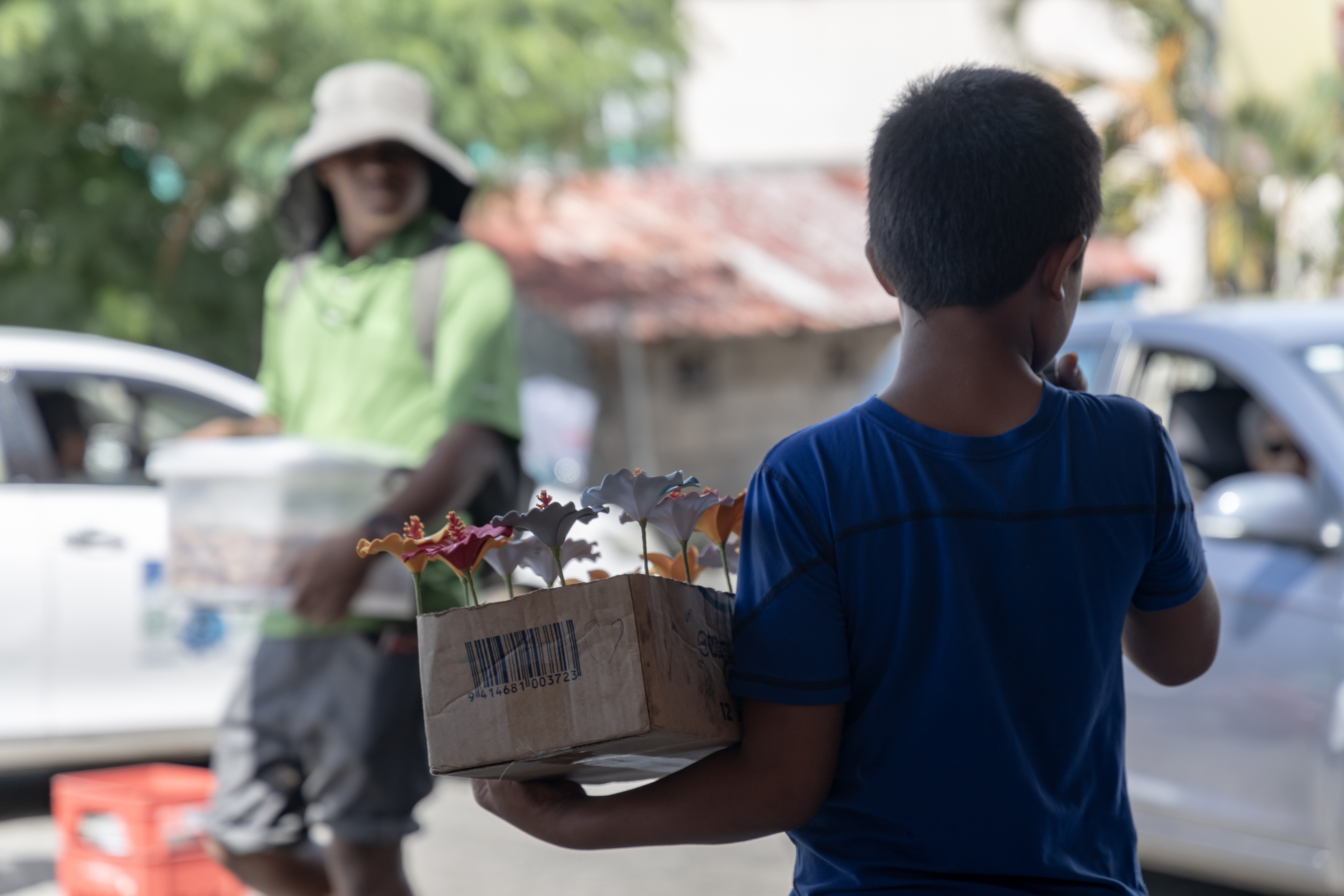
There are 135 child vendors between the ages of five and 16-years-old in Samoa and these are the ones that have been sighted by the survey team which means that the number of children involved in such form of child labour in Samoa could be more.
The Rapid Assessment of Children work on the Streets in Samoa was commissioned by International Labour Organisation (ILO) in response to the concerns raised at the Samoa Forum in 2014 over the lack of data and information on child labour in Samoa. From the forum discussion, the stakeholders had identified the major child labour issues in Samoa as children in street vending, children used by businesses to sell their products, children scavenging on the streets and at the local dump sites and out of school children, and children not attending school.
As pretty as a picture we would like to paint about Samoa these are the facts which are staring us right in the face. Remember, this is not an issue that we can keep out of sight so it is out of mind, because this ugly truth will translate into greater social problems.
What is saddening is that the issue has been talked about for 15 years and little to no action has been taken. Now the Child Labour Unit of the Ministry of Commerce, Industries and Labour says they use the data to develop a national action plan.
Amazing! So all that talk for 15 years, we are going to talk some more about this, and make a national plan which in the end may not get implemented because the government’s priority is elsewhere. While that happens, more and more children end up engaged in the different forms of child labour.
The report is not compiled by someone from overseas. It was the National University of Samoa and social media commentators who were on the verge of saying, ‘that is an overseas report’, to be informed that it is not.
Children are at the dump scavenging with their families. They are not foraging for food but for items which they can use or fix and resell. There are more than a dozen things wrong with the scenario. The Ministry of Natural Resources and Environment should look into how this is even being allowed, what are the security personnel at the landfill doing?
There are serious health implications of this. Are we still sleeping on this issue? It sure looks like it.
The Government made education compulsory for children between five and 16-years-old. A hearty round of applause for that. However, these are families which have been hit hardest by some form of poverty.
Schools still demand an arm and a leg for fees, stationery is expensive, and the children need lunch at school. Why have we not gone on the track to subisidise school fees or make school fees and bus fares free for children whose collective household income is less than $20,000 a year.
Because under the current law, parents whose children are not at school can be penalised but this puts more financial stress on a person who is already struggling to make ends meet.
Churches in our beloved Samoa are wealthy and powerful. Can the churches not involve underprivileged families in fundraising and can the churches set up welfare funds for such families and direct the help towards children.
Can our members of parliament set aside money to pay for school fees and bus fares for needy children from the $1 million constituency grant? Surely all those fancy chairs are not needed. It was recently highlighted that close to $130,000 was used to refurbish a district office.
Can someone do the math here and find out how many children could have been helped with education and bus fares from half of that money?
International Labour Organisation Director for Pacific Countries Martin Karimli said in the Pacific there is clear evidence that children are susceptible to the worst forms of child labour and trafficking. '
"ILO child labour research studies in some Pacific island Countries found children in the worst forms of child labour, including hazardous work (agriculture, scrap metal scavenging and construction), commercial sexual exploitation and illicit activities such as drug trafficking, begging and pick pocketing. Children were also identified working below minimum age of employment, particularly in the urban informal economy as street vendors, loaders or carriers, scavengers, and in backyard garages and supermarkets," he said.
It is visible daily and involves young children to teenage children, during school hours and leading to late hours at night, affecting their health and well-being and their education.
Maybe we are like the three monkeys. The three wise monkeys are a Japanese pictorial maxim, embodying the proverbial principle "see no evil, hear no evil, speak no evil". While this may have relevance, this is what we are doing to an issue which we can solve.
There is a child vendor from Fagalii, 12-years-old, who sells at the bus stand in Apia. Apparently his mother makes him sell because school is expensive and he can make money on a daily basis. This child cannot speak in English, nor does he know how to read and write.
We are so good at standing up in front of the world and pointing out issues to the rest of the world to deal with. Here we are with a problem in our backyard which has a swift solution but we choose not to see it, hear it nor speak of it, wait a minute, we just speak of it.