Login
Login
 Subscribe
Education’s structural failures need urgent fixing
As a local media company always on the lookout for talent with a knack for writing, it hasn’t been a walk in the park for our recruitment team.
We’ve recruited both Form 6 graduates as well as degree holders from the National University of Samoa (N.U.S.) in recent years, focusing on those with good English marks, in the hope that they would make a smooth transition in mastering the art of basic news writing and consequently become full-time reporters.
But the script got all muddled up the moment they put pen to paper – we noticed many of them struggled to string together basic English sentences, or lacked knowledge in reported speech which is considered essential for journalism.
We are aware of other local companies having their own challenges, especially those whose core functions revolve around English-based report writing, analysis and commentary or had a lot of interaction with donor partners or international organisations, where English is the language of communication.
A fortnight ago the Samoa Observer reported on a presentation last month by N.U.S. academics at the 2023 Principals Conference, which unveiled shocking data that showed a failure rate of up to 60 per cent among Foundation students in English language skills.
The presented data, which was reported a month later by this newspaper, shocked the public with many people unaware of the struggles that Samoa’s next generation of leaders were facing academically in secondary schools or colleges prior to entering university studies.
Unsurprising, the N.U.S. administration later released a statement, in response to the Samoa Observer article to emphasise that the Proficiency in English Language Test (or PELT) – which the Foundation students from 2021 and 2022 sat – was only a diagnostic test to determine the level of English proficiency that students enter the university's Foundation programme with after completing Year 13.
While it is true that the PELT is a diagnostic test, the 60 per cent failure rate that the students got after sitting the test is indicative of systemic failures in Samoa’s education sector at either the secondary school, primary school, or early childhood education levels which urgently need rectifying.
We believe education levels in Samoa from secondary schools or colleges down are generally in decline. If nothing is done by those in authority including the relevant authorities to address the fall, then the country is in danger of having an ignorant population, which does not augur well for a thriving democracy such as ours.
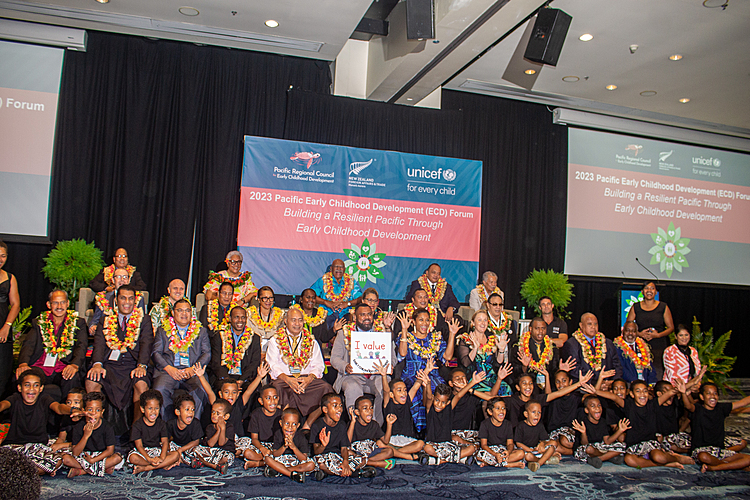
This is why we are encouraged by the reaction this week from Samoa’s Minister of Finance, as the Co-Chair of the 2023 Pacific Early Childhood Development Forum currently underway in Fiji, following revelations that only 26 per cent of children who attend Early Childhood Education in Samoa are actually enrolled in pre-schools around the country.
Mulipola Anarosa Ale-Molio'o told this newspaper that the statistics from Samoa is “disappointing” and appealed for a holistic approach from all respective ministries within the Samoa Government to address the issue.
She believes it is time to direct the country and the Government’s focus to Early Childhood Education as it is the "answer to all the social issues happening in Samoa."
"When it comes to development, there's no need to hide that we mainly focus on youth and the elderly population, but we're losing our focus on the foundation of any human being which is Early Childhood Education," Mulipola said.
"Based on the stats I got from the Ministry of Education, only 4,500 children are in pre-school which is 26 per cent of the population for this age group.
"So my question is, where is the 70 per cent? Those are all the children who should be in preschool."
We believe the country is already paying the price for the lack of focus by successive Human Rights Protection Party (H.R.P.P.) governments on reforming critical components of the country’s education system, which is why graduates from secondary schools or colleges are “unemployable”, and those who do get selected to the N.U.S. continue to struggle to meet the rigorous demands of tertiary education.
Prime Minister Fiamē Naomi Mataʻafa, who was part of the panel discussion at the opening of the 2023 Pacific Early Childhood Development Forum, also told participants that she supports more Government investment in Early Childhood Development (E.C.D.).
"We need to realise that starting them [children] early and financing E.C.D is the best way to develop and nurture the future of our islands,” Fiamē said.
"Let's make our islands a place our children would want to stay and contribute to its development."
It is time for the Fa’atuatua i le Atua Samoa ua Tasi (FAST) Government to begin work to identify structural failures in the education system, and the work should begin with the country’s early childhood education system, which hopefully will have a positive effect on the higher senior levels of primary and secondary schooling in order to arrest the slide in quality all-round graduates.
Work on these education intervention policies shouldn’t be delayed until on the eve of the next general election, which was a mistake that the former Administration made.
Rather they should begin in earnest, because every year of delay translates to more young Samoans missing the opportunity to academically progress themselves, and therefore forfeit potential years of success.